


(Click on the cell’s organelles for more information)
Types of Cells
the Cell’s Organelles

LYSOSOMES
These membrane bags are the garbage collectors. They also help breakdown old organelles. contain enzymes that break down unwanted substances and recycle worn-out organelles.

VESICLES
A bag or sack that transports proteins from the Golgi apparatus to where ever they are needed.

VACUOLES
They are mobile packages of water, usually, but can engulf food or other solids within the cell.

NUCLEUS

They contain all the necessary DNA in the form of a Chromatins. Within the nucleus is the nucleolus. This is responsible for synthesizing ribosomes which are mRNA translators and turn amino acids into proteins.
ENDOPLASMIC
RETICULUM

The inner membranes of the ER are covered in ribosomes, which gives it the name of rough ER. The rough ER has many functions, but some important ones are protein folding and synthesis. Improperly folded proteins are believed to be the cause of Alzheimer’s, Parkinson’s, Huntington’s, Creutzfeldt-Jakob, cystic fibrosis, Gaucher’s, and mad cow disease.
MICROVILLI

These structures expand the area of a cell’s surface to improve intake and minimize volume increase. Not all cells have them.


The Golgi apparatus is a series of stacked membranes that package proteins intended for external cell use.
GOLGI BODY


It is a distinct outward section of the overall ER responsible for making lipids and steroids. It is smooth because it usually has no ribosomes attached to the surface, unlike the rough ER.
SMOOTH E.R.
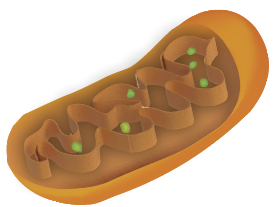

The powerhouse of the cell! They release energy from glucose and others in the form of ATP or adenosine triphosphate. ATP is the basic energy requirement for all cells to do work.
MITOCHONDRIAN
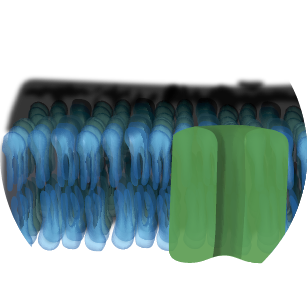


Also called a phospholipid bilayer, this flexible membrane surrounds the cell and controls what enters and exits. It consists of two layers of lipid molecules. The big lipid ‘heads’ are polar and hydrophylic and thus attracted to water. Their dual ‘legs’ are non-polar and hydrophobic, or repel water. The large green proteins are called aquaporin.
PLASMA BARRIER
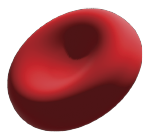
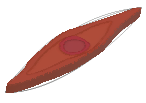
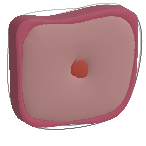
They look like donuts and carry oxygen throughout the body.
Specialized cells that shorten and relax to create movement.
These epidermal cells are the basis of skin, which is important in protecting the body. Skin is considered the largest organ of the body.
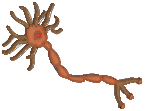
These long cells carry electrical action potentials that send signals down their axons where their terminals meeet dendrites of other neurons. There is a small gap between these cells called synapses used for communication by hormones and chemicals called neurotransmitters. Examples include acetylcholine, dopamine, and serotonin.
RED BLOOD
MUSCLE
EPIDERMAL
NERVE/NEURON



A cylendrical microtubule that resemble a star shape on cross-section. They are important for cell division.
CENTRIOLES


